

Marc Chagall was one of the artists featured in a set of Montessori artist cards I used with my children when they were little, but it wasn't until quite a few years later when I was reading Island of the World by Michael O'Brien that I became interested in learning more about Chagall and his art.
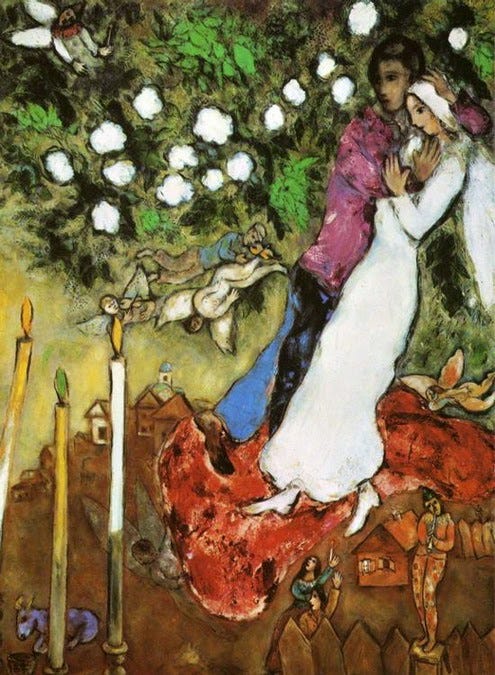
In O'Brien's book, Josip, the main character is speaking to his friend, Caleb, a troubled and rebellious young youth whom he had befriended some years before. Over time Josip had encouraged the boy's latent academic ability and when Caleb wrote his poem, Giraffe Wars, he gave it to Josip to read.
"So, how did you like Giraffe Wars?"
"I regret that I did not like it, Caleb."
"Oh, thank you very much."
"However, I did notice your technical competence, and your growing sense of creative intuition."
"Oh, then it's my hypothesis you reject."
"Poetry must never be a vehicle for ideology."
"That's ridiculous. Poetry is always a vehicle for somebody's ideology! Look at Ezra Pound!"
"I cannot read him. His Fascism disturbs me, just as Picasso's paintings disturb because they derive, consciously or subconsciously, from his Communism."
"I like Picasso - a lot!" the boy says in a challenging tone.
"You should go to the Metropolitan and spend time with Chagall."
"Who is Chagall?"
"I will take you to meet him on Saturday. He is in painting what a poet should be in poetry. These heroes you are fond of, Picasso and Pound, they disturb not in the way a painting or poem should disturb. Instead they create a malfeasance in the subconscious - and in the soul."
Francis Schaeffer commenting on Picasso in his book, How Should We Then Live, said,
'In great art the technique fits the worldview being presented, and this new technique of fragmentation fits the world view of modern man.'
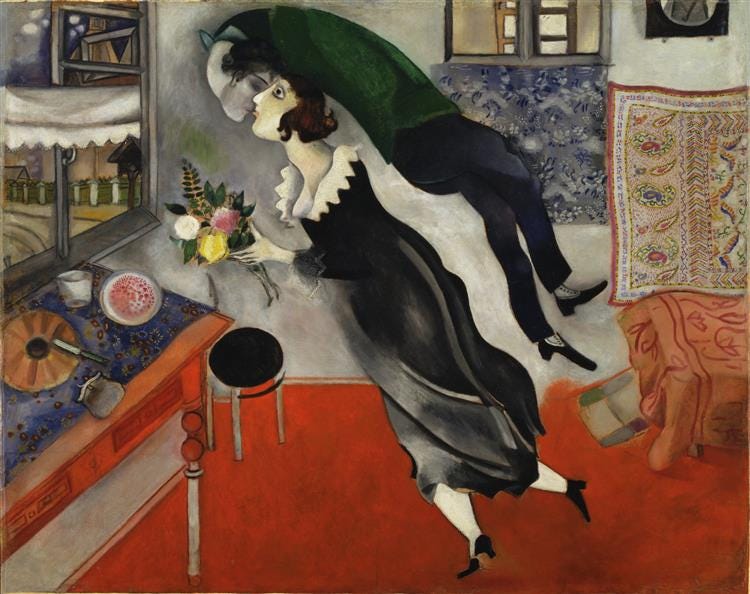
Marc Chagall's view of life was rooted in his faith and permeates his art. A Hasidic Jew, he was born in Vitebsk, Belarus in 1887. He lived through the First World War and the Bolshevik Revolution in Russia and married Bella who features in many of his paintings in 1915. From 1922 to 1941, Chagall and his family lived in France but when France was occupied by the Nazis the family made their eleventh-hour escape to America in 1941.
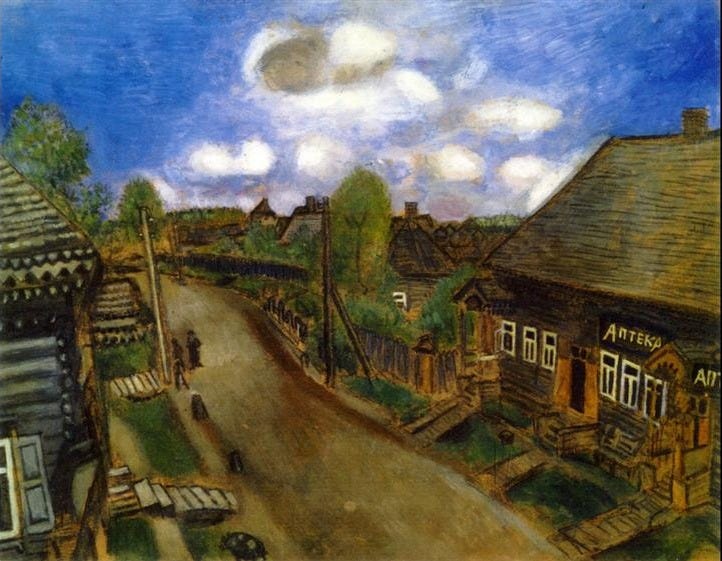
Chagall created works in just about every artistic medium such as painting, book illustrations, stained glass, ceramic, tapestries, mosaics and settings for the stage. His inspiration came from his native Vitebsk with its childhood memories, his faith and his love for his wife.
Marc Chagall Net has probably the most comprehensive collection of his artwork that I've seen and includes biographical information. The artwork I've put in this post came from this website and WikiArt.
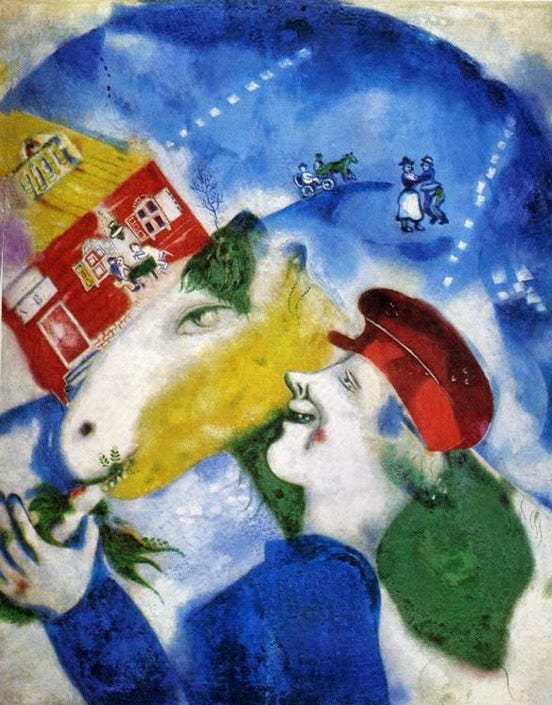
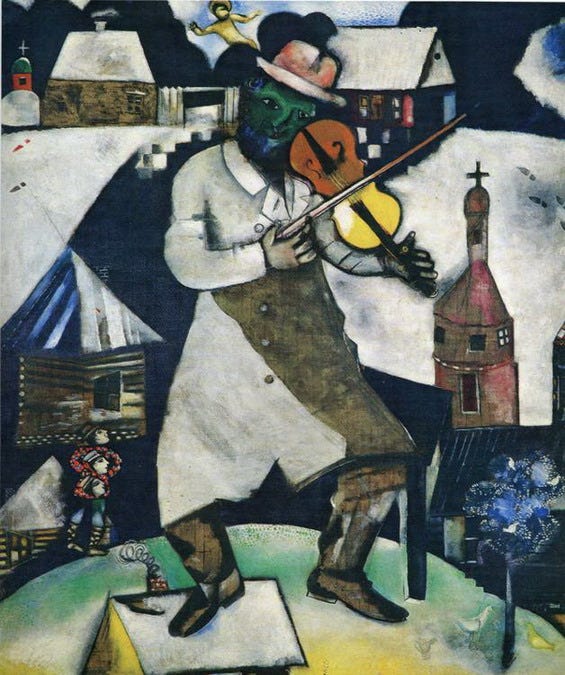
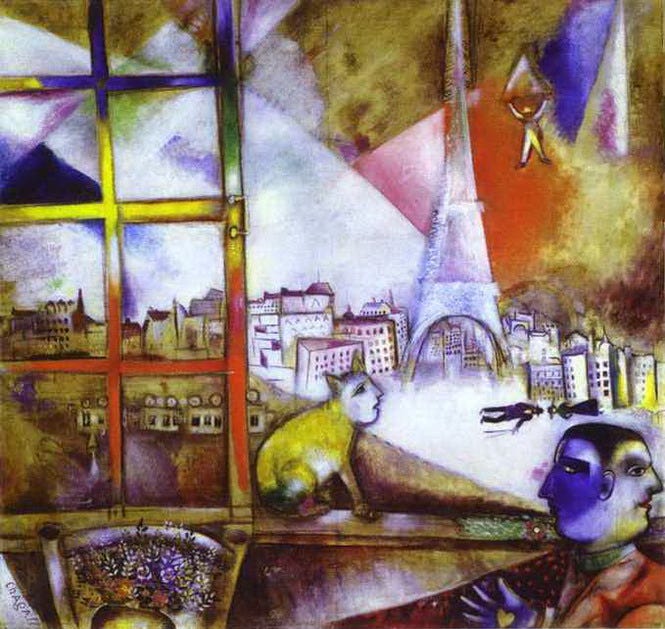
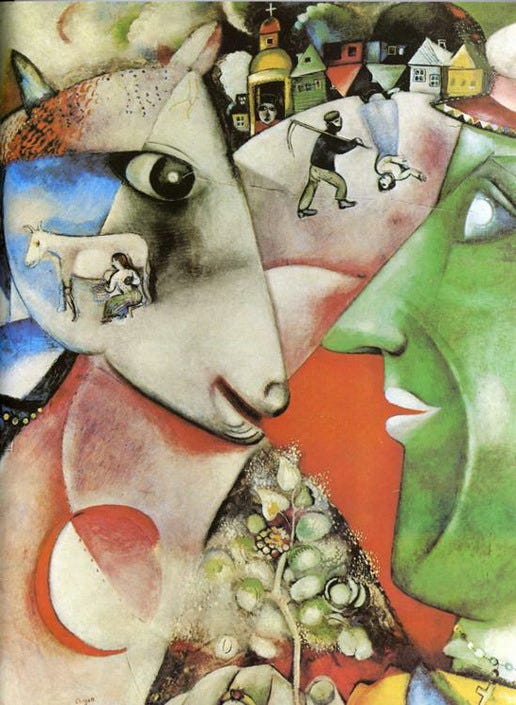
‘The Bible is life, an echo of nature, and this is the secret I have endeavored to transmit.’
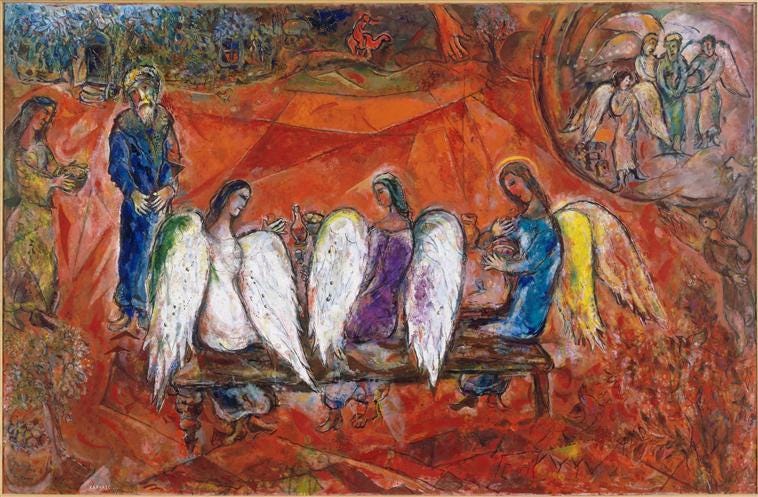
‘I did not see the Bible, I dreamed it. Ever since early childhood, I have been captivated by the Bible. It has always seemed to me and still seems today the greatest source of poetry of all time.’
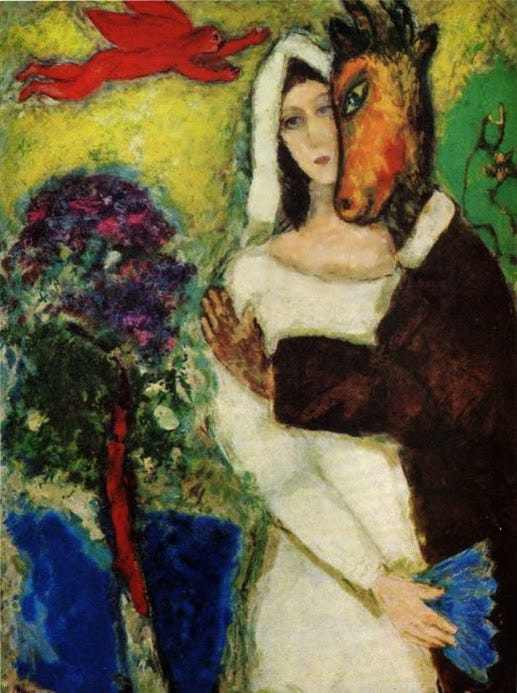
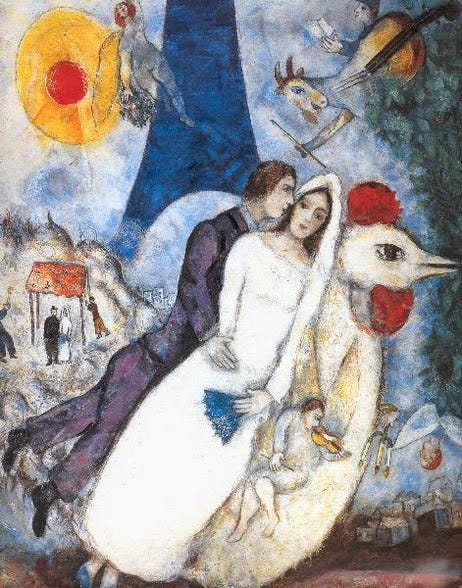
About six reproductions of the work of a single artist are chosen each term (I’ve often used calendars or a large book on a particular artist that have good quality prints) -
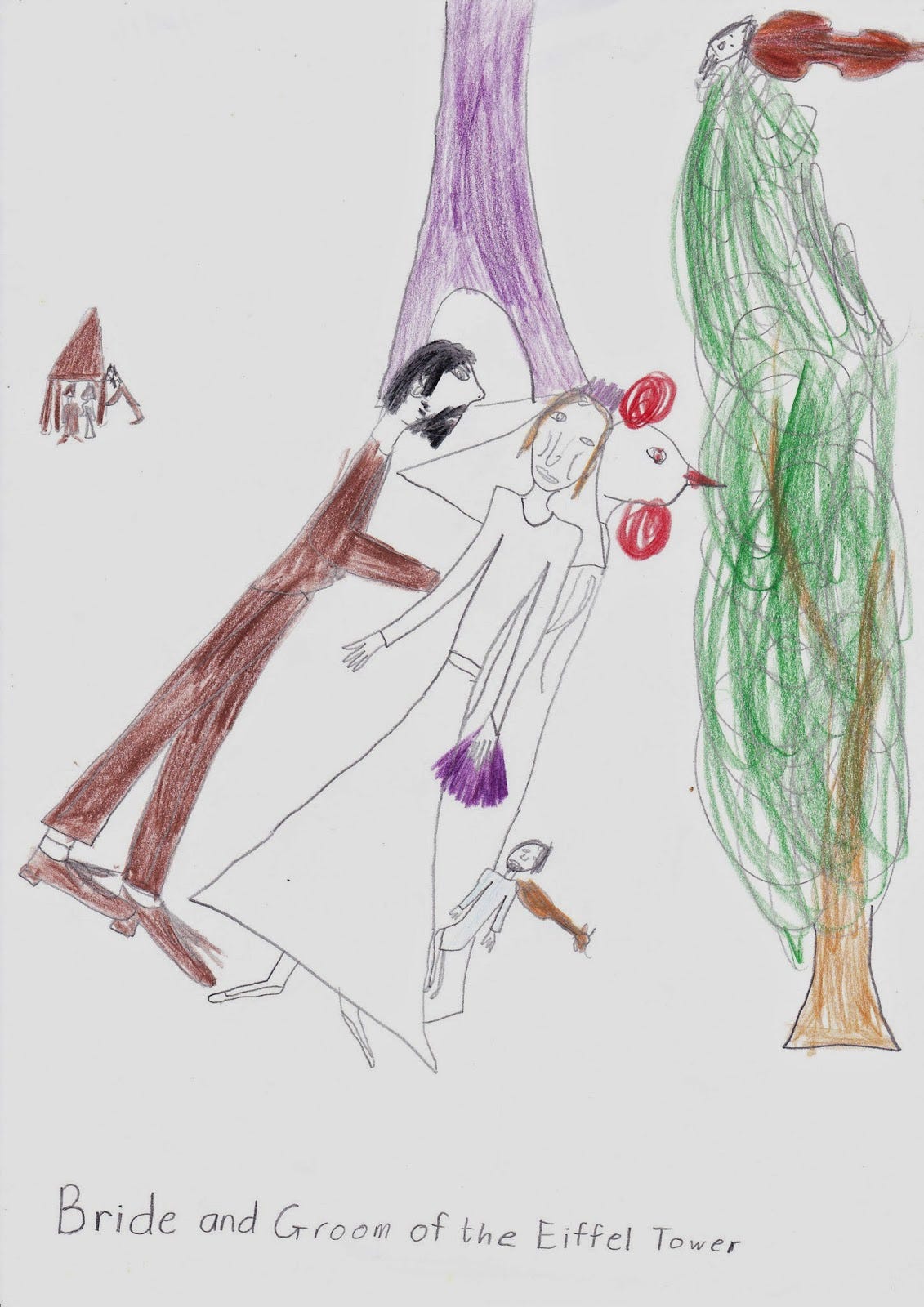
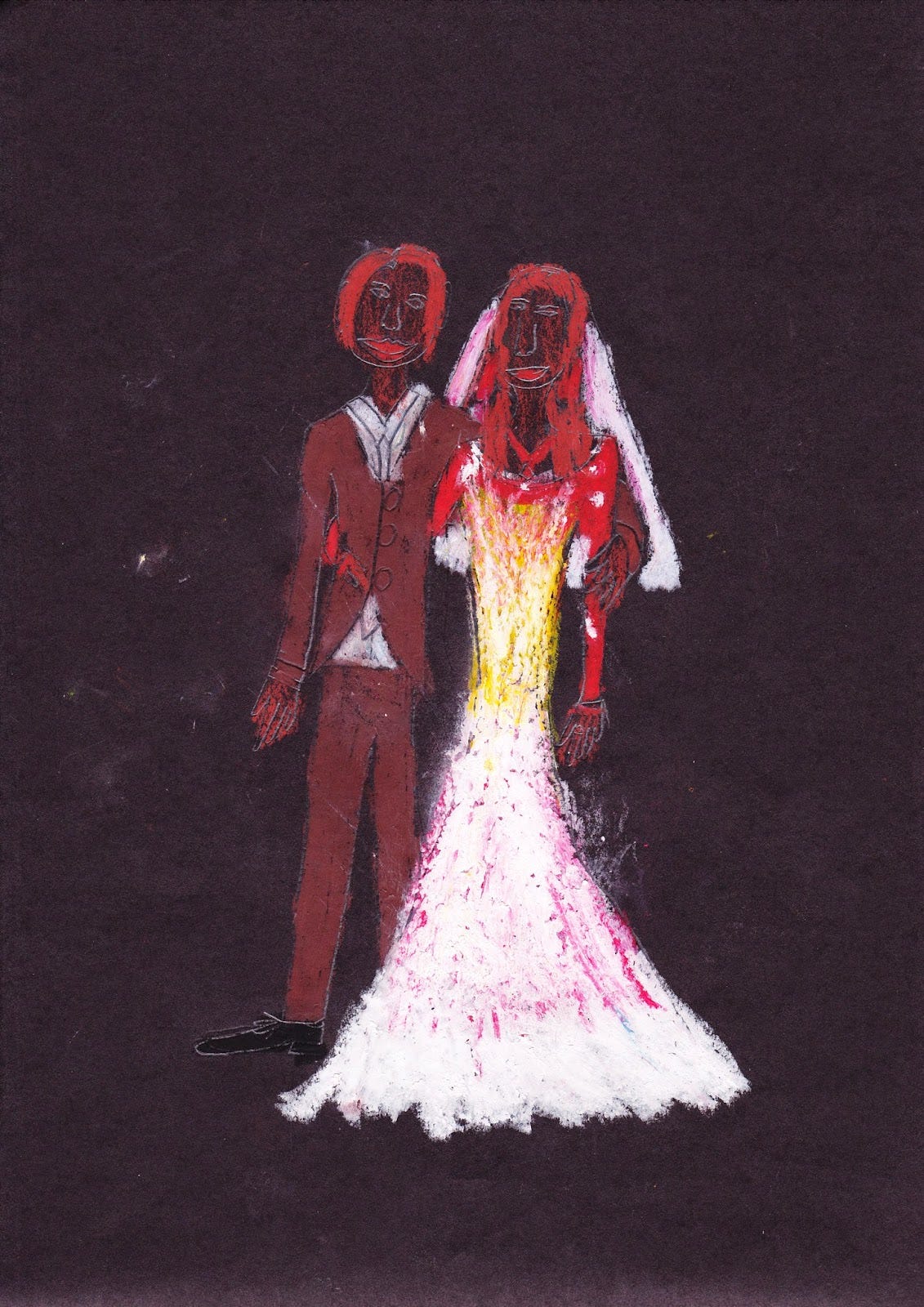
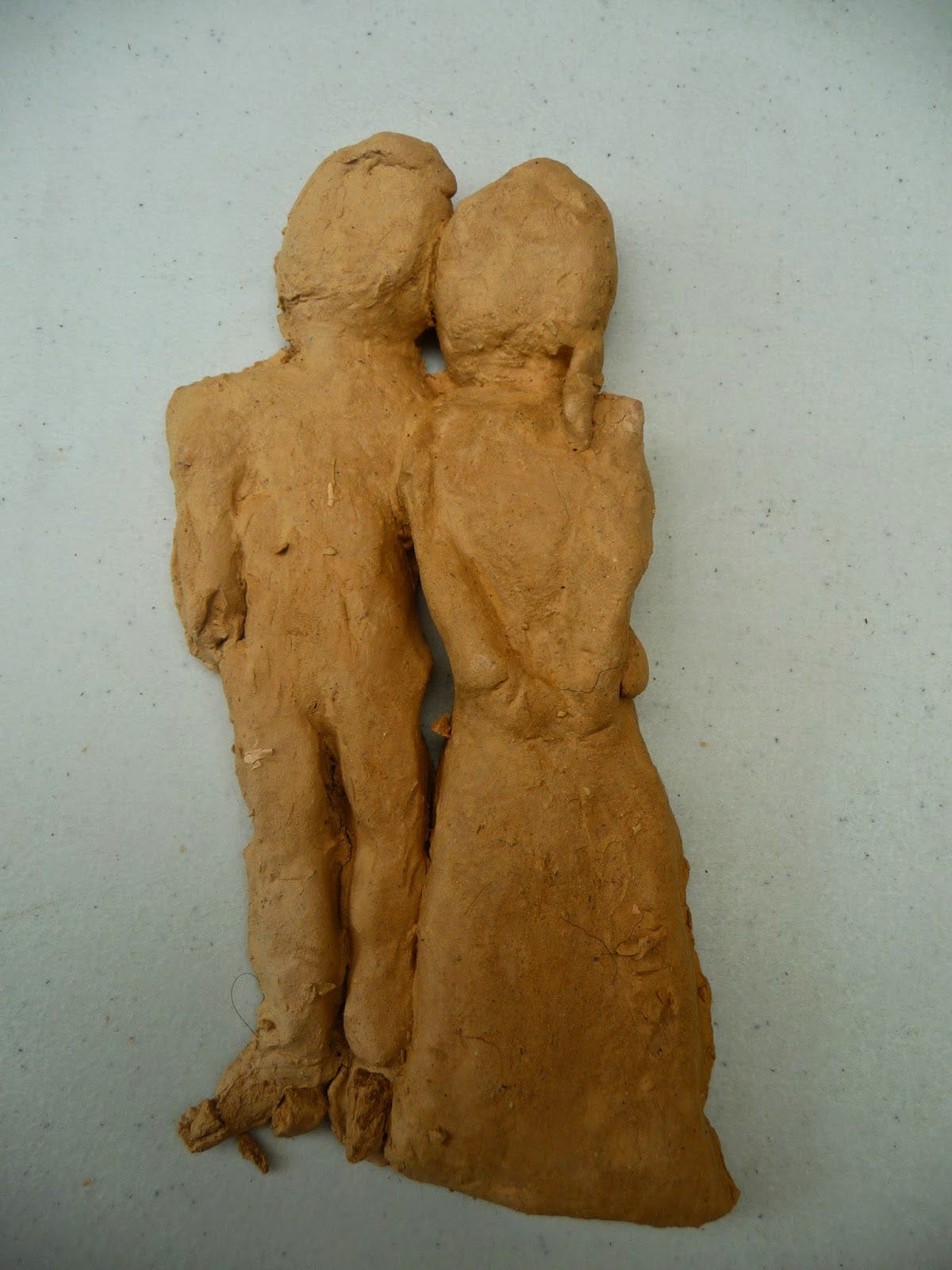
…a short story of the artist's life and a few sympathetic words about his trees or his skies, his river-paths or his figures, the little pictures are studied one at a time; that is, children learn, not merely to see a picture but to look at it, taking in every detail. Then the picture is turned over and the children tell what they have seen…
Sometimes I’ve had my children sketch a picture from memory:
Places of Interest:
The Marc Chagall Museum in Belarus
Vivian Jacobson, lecturer and author on Marc Chagall
Chagall Tapestries - Belgian Weaver, Yvette Cauquil-Prince (1928-2005)